


Taking the Time for You.

Palm Bay is the largest city in Brevard County by land area, and that size tells a story about how different the experience of living here can be depending on which part of the city you call home. The older sections along the waterfront have absorbed decades of Florida humidity and coastal proximity. The sprawling residential grid that extends west across flat, sun-exposed terrain covers some of the most thermally demanding real estate in the county. And the neighborhoods tucked in between carry their own combinations of age, exposure, and infrastructure history. What every corner of Palm Bay shares is a Brevard County summer that demands serious, sustained performance from a residential heat pump. Bates Air and Heat is a veteran-owned HVAC company that works across this city and approaches each neighborhood with the specific knowledge it actually requires rather than a single method applied everywhere.
Palm Bay homeowners tend to be practical people with busy lives, and a heat pump that is gradually losing ground can stay below the threshold of obvious crisis for longer than it should before someone makes the call. The gap between a system that is running and one that is performing correctly is where most repair situations live before they become emergencies. These are the clues that close that gap and warrant a service visit:
Palm Bay’s size means there is no shortage of HVAC companies willing to take a call here, but showing up is different from showing up prepared. The city’s range of neighborhoods, construction eras, and environmental conditions means the right diagnosis in one part of Palm Bay may look entirely different from the right diagnosis a few miles away.

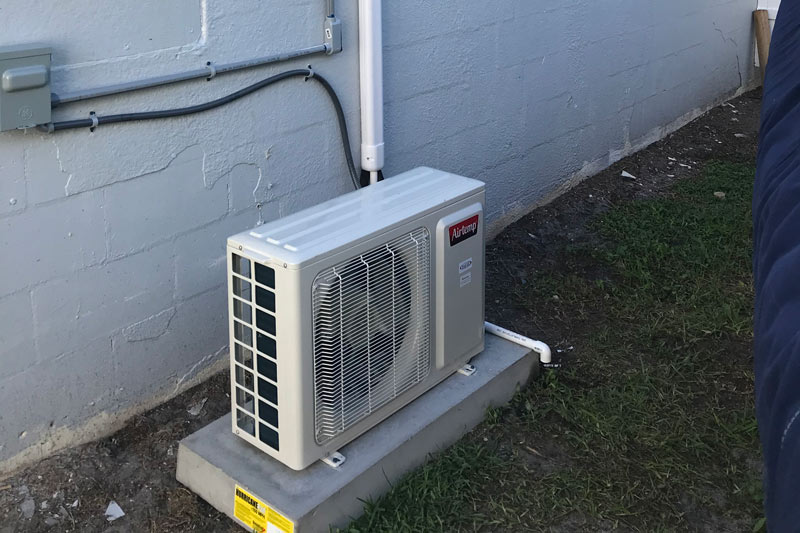
Palm Bay’s development unfolded in waves across several decades, producing a residential landscape that ranges from 1960s concrete block homes near Turkey Creek and the Indian River to tract neighborhoods built during the population boom of the 1980s and 1990s to newer subdivisions still establishing themselves on the western edge of the city. Each of those construction periods and locations carries a distinct set of HVAC vulnerabilities shaped by the materials available at the time, the building standards in effect, and the specific environmental pressures of the surrounding area. The western residential grid, built largely on open scrubland with minimal mature canopy, produces outdoor unit conditions similar to what we see in other inland Florida corridor communities: high ambient temperatures from full-day sun exposure with no shading buffer, and scrub vegetation particulate that packs into condenser fins in ways that resist standard cleaning. The eastern sections near Turkey Creek Sanctuary and the Indian River produce a different set of pressures, where biological diversity in the surrounding landscape introduces organic airborne compounds that find their way into coil surfaces and drain systems with unusual regularity. Across the whole city, the failure patterns we encounter most consistently include:
Diagnosing a heat pump in Palm Bay correctly means knowing which version of the city the property sits in and what that location’s specific history asks of the equipment inside it.
We come to a Palm Bay service call understanding that the address matters. A home in the 1970s waterfront section near Turkey Creek is a different diagnostic environment than a house built in 2005 in a western Palm Bay subdivision, and we approach each one accordingly. Our process is thorough regardless of which part of the city we are in, because the range of what we might find here is wider than in most communities we serve. Our heat pump repair services include:
We offer maintenance agreements that make particular sense for Palm Bay homeowners across all parts of the city. The range of environmental conditions here means the wear curve is steeper than in more uniform communities, and a scheduled annual visit is the most practical way to stay ahead of it regardless of which neighborhood you are in.
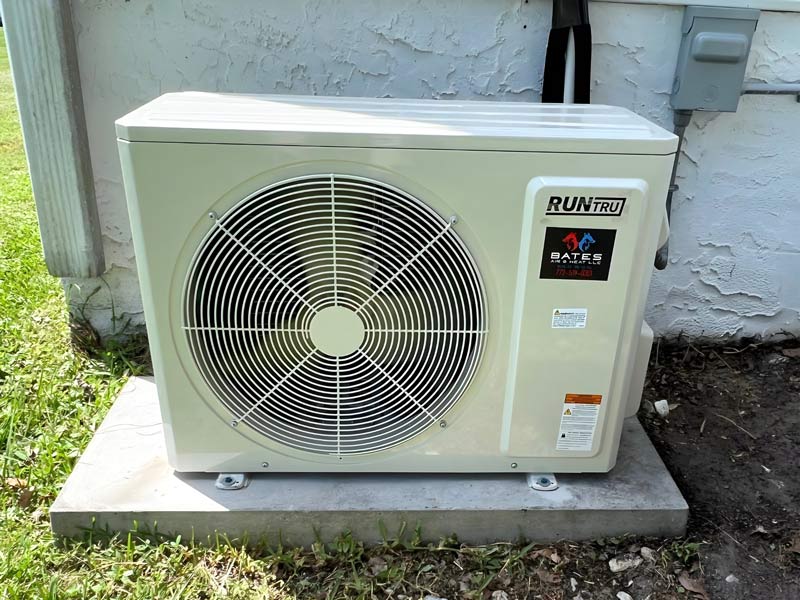
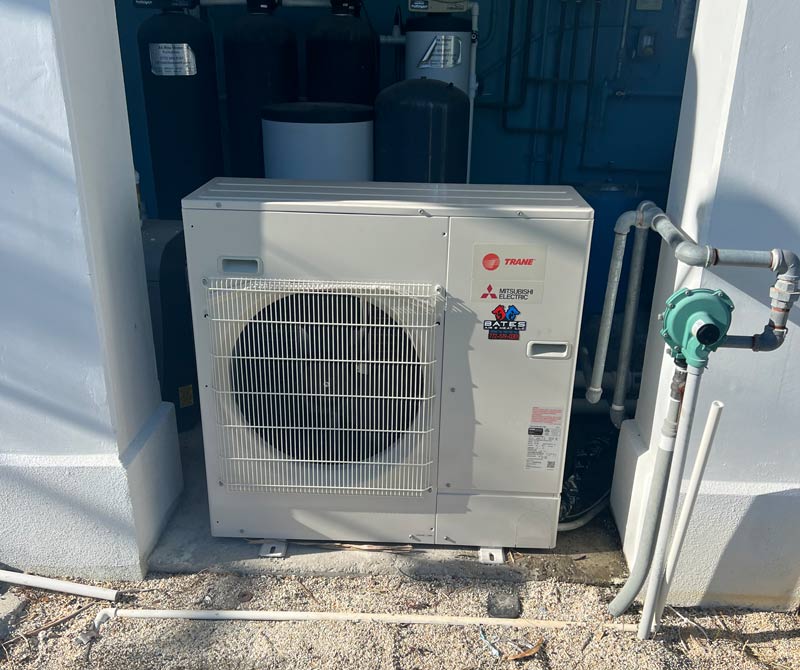
We received a call last summer from a homeowner named Marcus who lives in one of the established residential sections of southwest Palm Bay. His system had been running without complaint for several years but had started struggling visibly in June, running all day without bringing the house below 80 degrees. He had checked the filter, confirmed the thermostat was set correctly, and could not identify any obvious reason for the sudden change in performance. When we arrived and pulled the outdoor unit apart, the condenser coil was carrying a dense layer of fine palmetto and scrub pollen that had accumulated over what appeared to be at least two seasons without a professional cleaning. The layer was thin enough to miss on a casual visual inspection but dense enough to have cut airflow through the coil by a significant margin. The capacitor was also reading well below its rated value, which was creating a compressor startup condition that was borderline on the best cycles and failing on the hotter ones, producing the intermittent full-system dropout Marcus had described. We cleaned the coil using a technique appropriate for the fine-particulate fouling specific to that part of Palm Bay, replaced the capacitor, and ran a refrigerant check and full electrical inspection before closing the unit up. Marcus said the system ran quieter and the house started dropping within the first hour. He mentioned he had not realized how much the surrounding scrub vegetation was contributing to what was happening to the outdoor unit. That conversation is one we have regularly in the western and southwestern sections of Palm Bay, where the native plant environment creates a fouling pattern that most homeowners have no frame of reference for until we show them what accumulated on the coil.
Palm Bay is a city that contains multitudes, and the HVAC company serving it needs to be prepared for all of them. Bates Air and Heat is veteran-owned, and the accountability that comes with that is not something that gets adjusted based on which neighborhood the call comes from or how straightforward the job appears going in. We bring the same preparation, the same thoroughness, and the same honesty to a service call in the oldest part of Palm Bay that we bring to the newest. Here is what that looks like when you call us:
Palm Bay is a big city, and the competition for HVAC calls here reflects that. We earn ours through the quality of the work and the honesty of the interaction, and that has been our approach since the beginning.
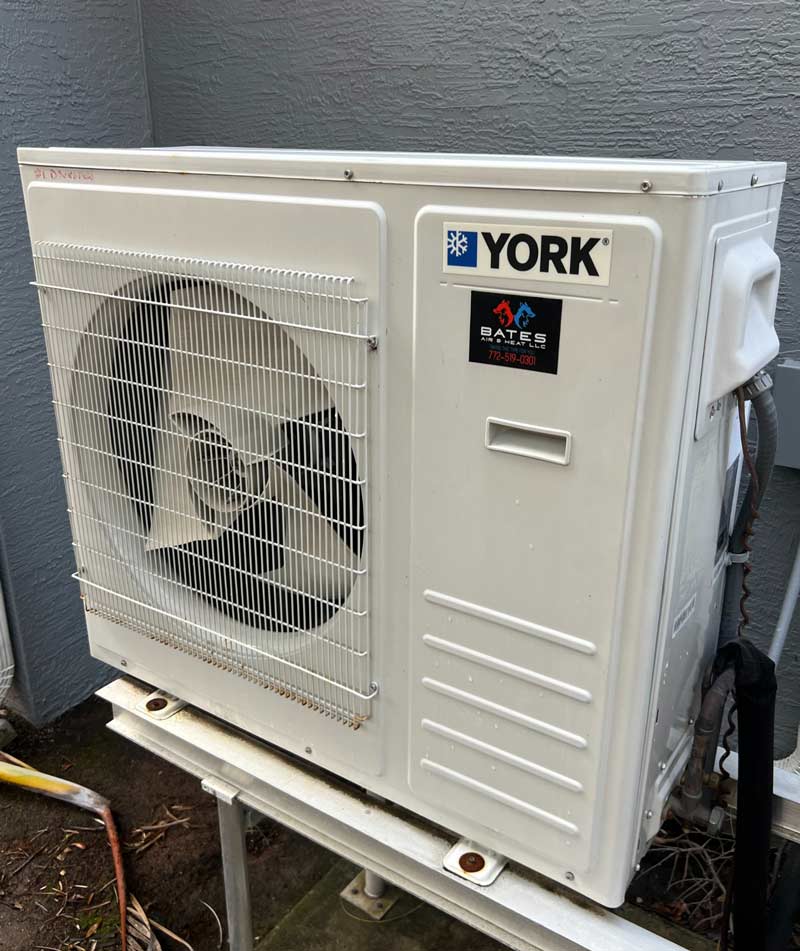

Scrub and palmetto pollen are fine-particulate materials with a sticky, resinous quality that bonds to aluminum condenser coil fins differently than coarser suburban debris. It compacts into a thin but dense layer that standard water rinsing does not fully dislodge, and its insulating effect on heat transfer is disproportionate to how thick it appears on the surface. In the western and southwestern sections of Palm Bay where native scrub is part of the surrounding landscape, this type of fouling is one of the more consistent findings we make on outdoor units that have not been professionally cleaned on a regular schedule.
Not always. In Palm Bay, a condenser coil packed with fine particulate from the surrounding native vegetation can reduce heat rejection efficiency enough to produce the same symptom as low refrigerant, with the system running continuously without ever catching up to the set temperature. A failed or weak capacitor can compound the problem by preventing the compressor from running at full capacity on hotter cycles. We evaluate all of those variables together rather than defaulting to a refrigerant assumption before the diagnostic is complete.
Eastern Palm Bay near the creek and river margins deals with higher organic content in the surrounding air from the biological richness of those natural areas. That translates to faster evaporator coil fouling with microbial growth, more aggressive drain system buildup, and in some cases refrigerant line corrosion from the organic acids present in lagoon-adjacent air. Western Palm Bay deals more with heat stress on outdoor components and scrub pollen fouling on the condenser coil. Both are manageable with regular service, but the service approach is different for each setting.
Brevard County’s combination of sustained summer heat, high humidity, and the specific biological and particulate environment of each Palm Bay neighborhood produces more annual wear on HVAC equipment than most non-Florida locations. Systems that receive regular maintenance in Palm Bay can reach fifteen years or more of reliable service. Systems that go without consistent attention in this environment tend to surface major component failures well ahead of that timeline. The specific neighborhood matters too, with waterfront and scrubland exposure producing a faster wear curve than more sheltered suburban settings.
Yes. We service the full city of Palm Bay, from the eastern waterfront neighborhoods to the western residential grid and everything in between. Palm Bay’s size means some service calls require more travel time than others, but that is part of working in a city this large and we do not limit our coverage based on which sections are more convenient to reach.