


Taking the Time for You.

Royal Poinciana Park is one of those Vero Beach neighborhoods that has been around long enough to develop a real identity. The streets are lined with homes that reflect decades of care and ownership, and the community has the kind of settled, unhurried feel that draws people who are not looking for the newest thing but rather something with substance. That same sense of history, though, extends to the mechanical systems inside these homes. Heat pumps in Royal Poinciana Park have been running through Indian River County summers for a long time, and the wear that accumulates over that kind of run time has a way of showing itself when the season gets serious. Bates Air and Heat is a veteran-owned HVAC company that works in this part of Vero Beach and handles every call with the thoroughness that an established neighborhood and an older system both deserve.
Heat pumps in homes like those in Royal Poinciana Park rarely fail without giving some indication first. The challenge is that the warning signs in an aging system can feel like background noise, easy to attribute to the heat of the season or the age of the house rather than something worth acting on. These are the signals that should move up the priority list:
In a home where the system has already accumulated years of Florida service, these signals carry more weight than they might in a newer installation. Catching them early keeps the repair in a manageable range and protects a system that still has useful life in it with the right attention.
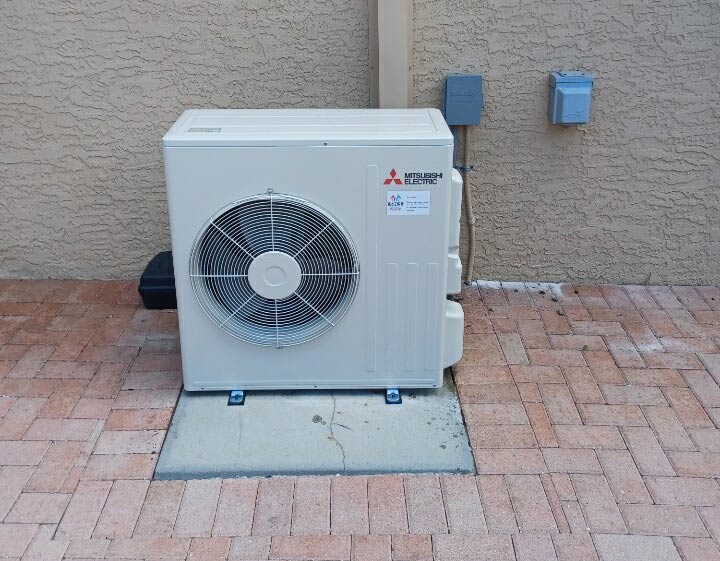
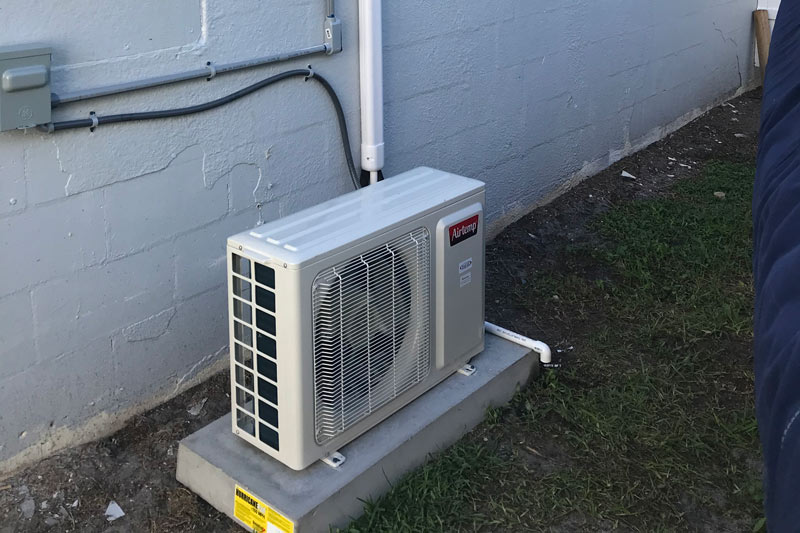
Royal Poinciana Park sits in the inland section of Vero Beach, sheltered from direct ocean exposure but well within reach of the humidity that the Indian River corridor generates year-round. Homes in this neighborhood were built primarily from the late 1950s through the 1980s, a range that spans several generations of residential construction standards and HVAC technology. The systems inside them reflect that diversity, and the problems they develop reflect the accumulated stress of operating in a subtropical climate through multiple ownership cycles and service histories. What we typically find when we open up equipment in this neighborhood tells a consistent story:
These are not edge cases in a neighborhood like Royal Poinciana Park. They are the natural outcomes of time, climate, and systems that have done their job faithfully without always receiving the maintenance they needed along the way.
We do not approach a call in Royal Poinciana Park the way we would approach one in a newer subdivision with recently installed equipment. The history inside these homes requires a diagnostic process that looks for what has developed over time, not just what broke this week. We work through the system completely before we make any recommendations, and we explain what we find in terms that make sense without requiring a technical background to follow. Our heat pump repair services include:
For homeowners in Royal Poinciana Park with systems that have been in service for a significant number of years, our maintenance agreements offer a practical way to stay ahead of the kind of gradual deterioration that is easy to miss between calls and tends to compound quietly until something stops working.

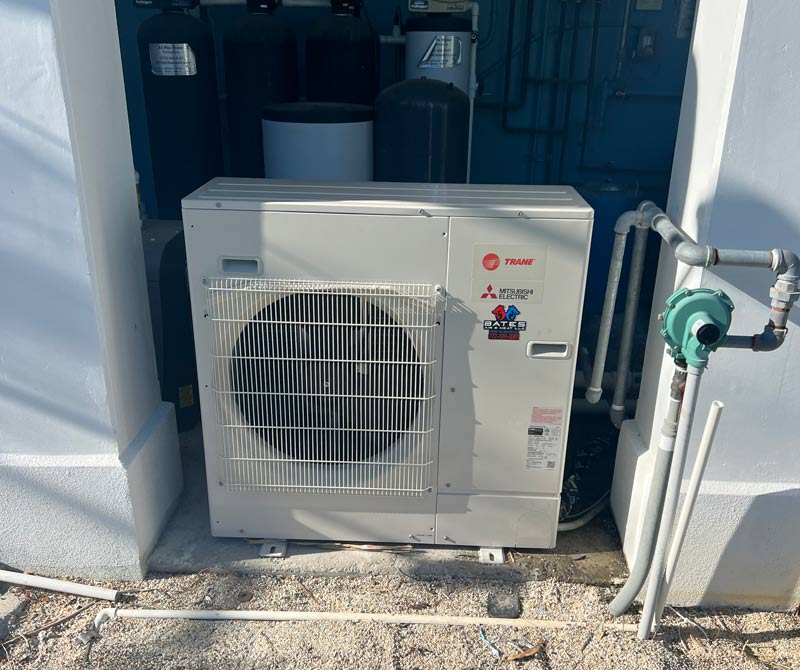
We took a call last fall from a homeowner named Helen who lives on one of the quieter side streets in Royal Poinciana Park. Her system had been in the house for a number of years and had always run without much trouble, but over the summer she had started waking up to a house that felt warmer than the night before, even though the thermostat showed the system had been running through the night. She had also noticed what she described as a musty undertone to the air that appeared in the mornings and faded by midday. When we arrived and pulled the air handler cabinet open, we found the interior insulation lining had separated from the cabinet walls in several sections and was partially obstructing airflow at the blower inlet. That obstruction was causing the blower to work against resistance it was not designed for, reducing effective airflow through the system and creating the warm-house-despite-running-all-night pattern Helen had been experiencing. The musty odor was coming from biological growth on the evaporator coil surface, which had developed because the reduced airflow was allowing more condensation to sit on the coil than the drain system could move efficiently. We removed the degraded insulation material, cleaned the evaporator coil thoroughly, treated the drain system, and verified airflow at every register before we left. Helen mentioned that no previous technician had ever opened the cabinet interior and looked at the lining condition. It is the kind of thing that requires taking an extra step, and that extra step is what made the difference between finding the actual problem and treating the symptoms.
Royal Poinciana Park is a neighborhood with character, and the people who live there have generally been around long enough to recognize when a company is being straight with them and when it is not. Bates Air and Heat is veteran-owned, and honest dealing is not a marketing position for us. It is how we were brought up to operate and how we run every job, whether the scope is a single component replacement or a full system evaluation on a machine that has seen a lot of Florida summers. Here is what you can count on when you call us:
Every call we take in Royal Poinciana Park becomes part of our record in this community, and we take that record seriously.


A musty odor that comes through the vents is almost always biological growth somewhere in the air path, most commonly on the evaporator coil or inside the air handler cabinet. In older systems, reduced airflow from blower issues or blocked return paths allows condensation to sit on surfaces longer than it should, creating conditions where mold and mildew take hold. A coil cleaning and drain treatment typically resolves it, but we also look for the airflow issue that allowed it to develop in the first place.
This is usually a capacity or airflow problem rather than a thermostat issue. If something is reducing the volume of conditioned air the system can deliver, whether a fouled blower wheel, obstructed return, degraded duct, or restricted coil, the system can run continuously without ever delivering enough cooling to offset overnight heat gain through the building envelope. Finding which of those is the limiting factor requires opening the system up and taking actual airflow measurements rather than just checking operational status.
No, and it tends to get less safe over time rather than more. Intermittent breaker trips on an HVAC circuit usually point to a component drawing more current than it should, a worn contactor, a capacitor that is failing, or a compressor working under strain. Running the system through those conditions accelerates damage to the component that is causing the problem and puts stress on the compressor, which is the most expensive part of the system to address.
From the outside, you usually would not. Cabinet insulation degradation is an internal finding that only becomes visible when a technician opens the unit and looks. Signs that something may be off include unexplained airflow reduction, a persistent dusty or musty quality to the air, and in some cases visible particles coming through the supply registers. If your system has not had its cabinet interior inspected in several years, it is worth adding to the next service visit.
There is no single age threshold that determines that. A fifteen-year-old system with a failed capacitor and a dirty coil can still have years of reliable service ahead of it with the right repair. A twelve-year-old system with a failing compressor and significant corrosion on both coils is a different conversation. We look at the specific condition of the equipment, the nature and cost of the repair, and what the system’s realistic remaining life looks like before making a recommendation either way.